



What Else Can Aso Oke Be?
It is easy to put two separate pieces together and call it an outfit. But what happens when those pieces are made from a fabric with a strong personality of its own?
Aso Oke is not the kind of fabric you forget once you have seen it. It has structure. It has weight. It has texture. And because of the way it has traditionally been woven, it carries a presence that can change the feeling of whatever it becomes.
For generations, we have known Aso Oke in certain ways. Wrapped. Layered. Draped. Tailored into garments for celebrations, ceremonies and moments where dressing well is part of the occasion. And there is nothing wrong with that.
But what happens when we ask it to do something else? What happens when Aso Oke is not waiting for an invitation?
The Fabric We Already Know
The Fabric We Already Know
Aṣọ-òkè, commonly shortened to Aso Oke, is a Yoruba handwoven textile traditionally made from narrow strips that are woven and then joined together to form a larger cloth. Historically, it has been a textile of prestige, with different forms of the cloth carrying different colours, patterns and associations.
It has also never been simply about fabric. Aso Oke has been part of how people dress for important moments, how identity is expressed and how clothing communicates the significance of an occasion. Certain garments and textiles made from it have been reserved for special religious, communal and family occasions.
So when most of us picture Aso Oke, there is already a picture in our heads, the expectation that because the fabric is special, the moment must be special too.
But fabric doesn’t have to be limited by the occasions we have attached to it.

When Tradition Meets a Different Idea of Dressing
When Tradition Meets a Different Idea of Dressing
The interesting thing about fashion is that materials can keep becoming something else. A fabric can carry history without having to dress exactly as it did before.
We have seen this happen with many African textiles. Designers have taken materials with deep cultural histories and placed them into new silhouettes, new contexts and new wardrobes. That doesn’t erase where the fabric comes from. If anything, it gives us another way to look at it.
And that is where the Oga Shirt and Ijapa Shorts come in
The Oga Shirt
The Oga Shirt
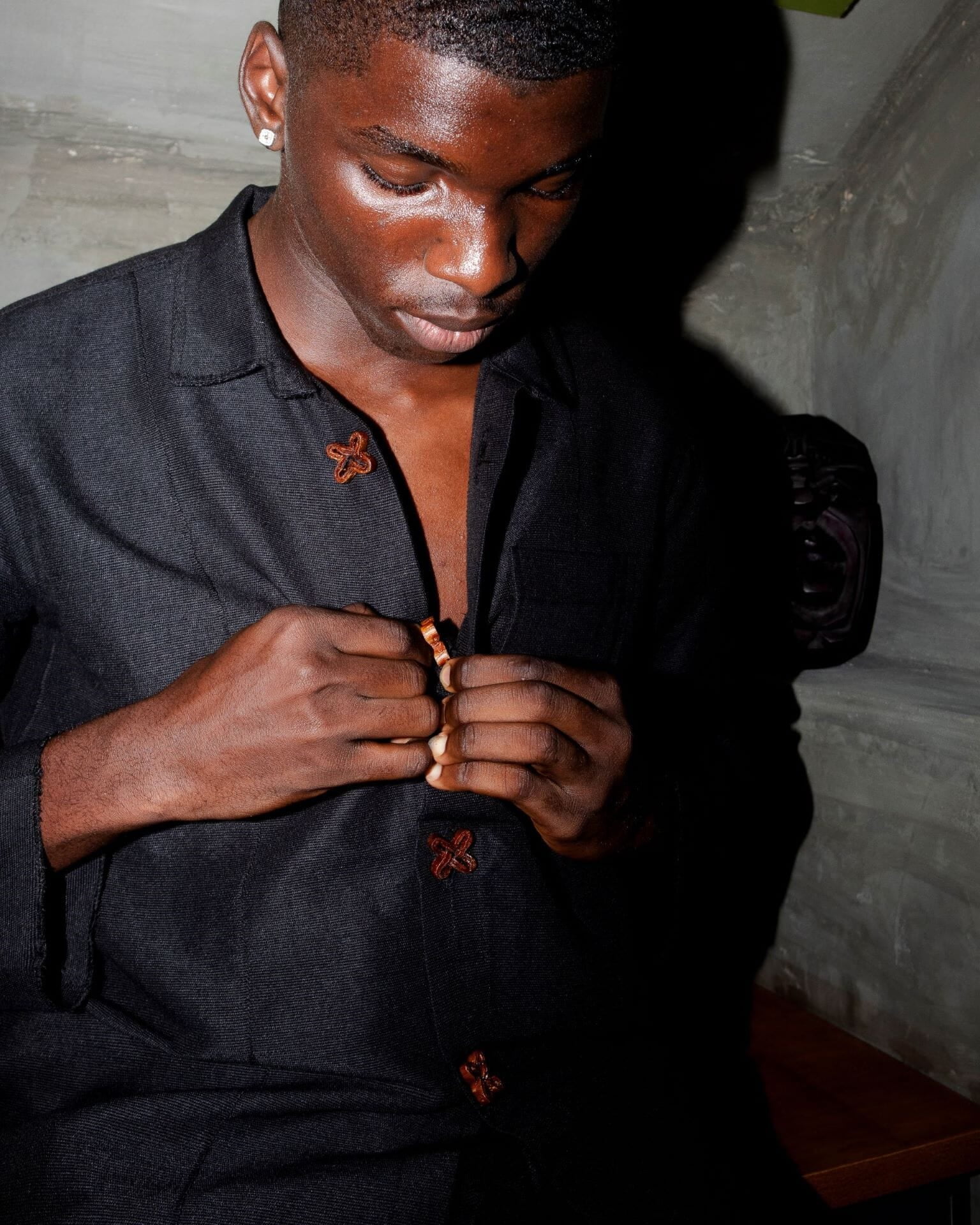
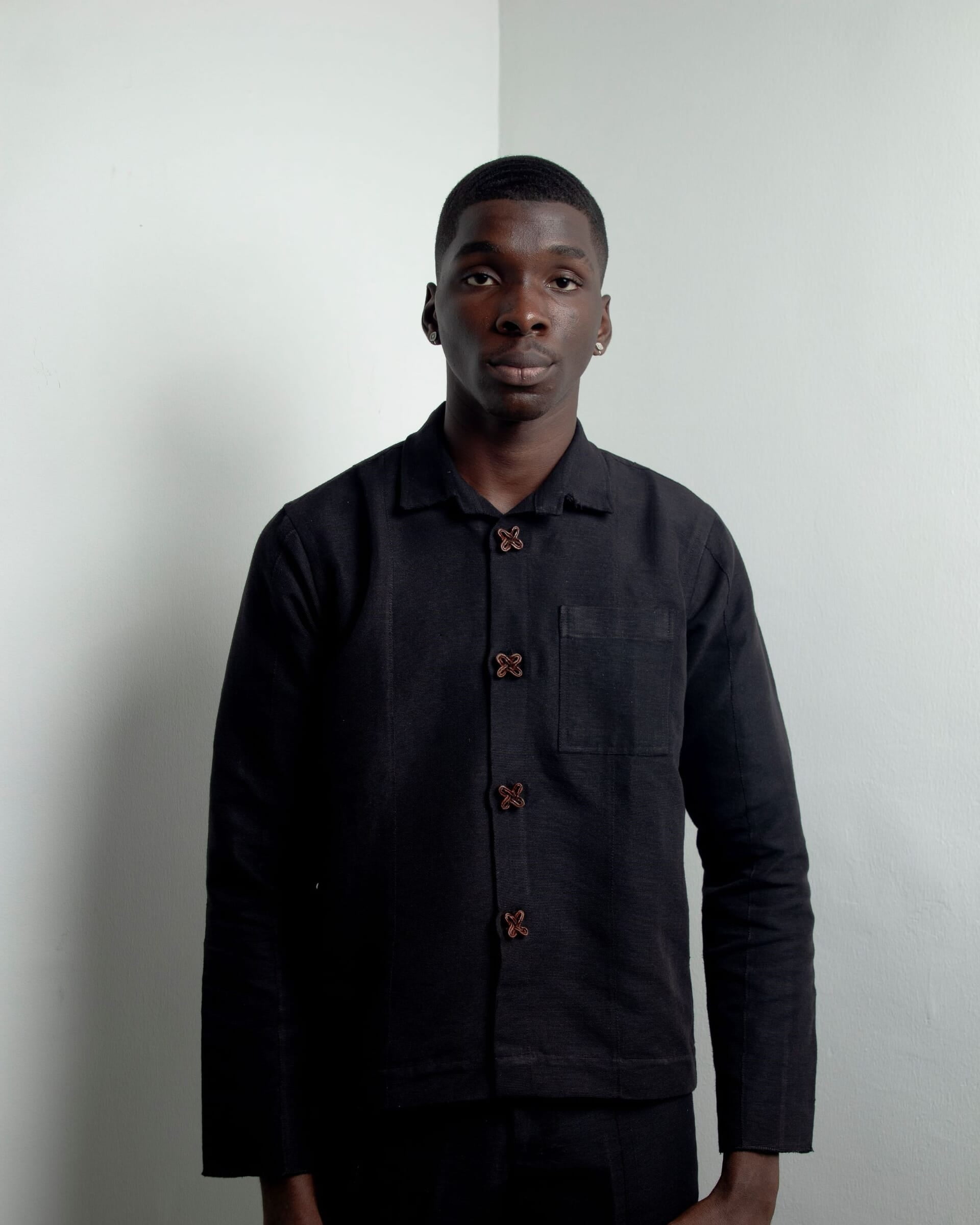
The Oga Shirt is a long-sleeved shirt, but the simplicity of the description doesn’t quite tell you what is happening with the piece.
There is a crafted button detail that gives the shirt a little more personality. It is the kind of detail you might miss from across the room and notice immediately when you get closer. That matters with Aso Oke. When the fabric already has texture, structure and visual presence, the design doesn’t need to fight it. It can work with it.
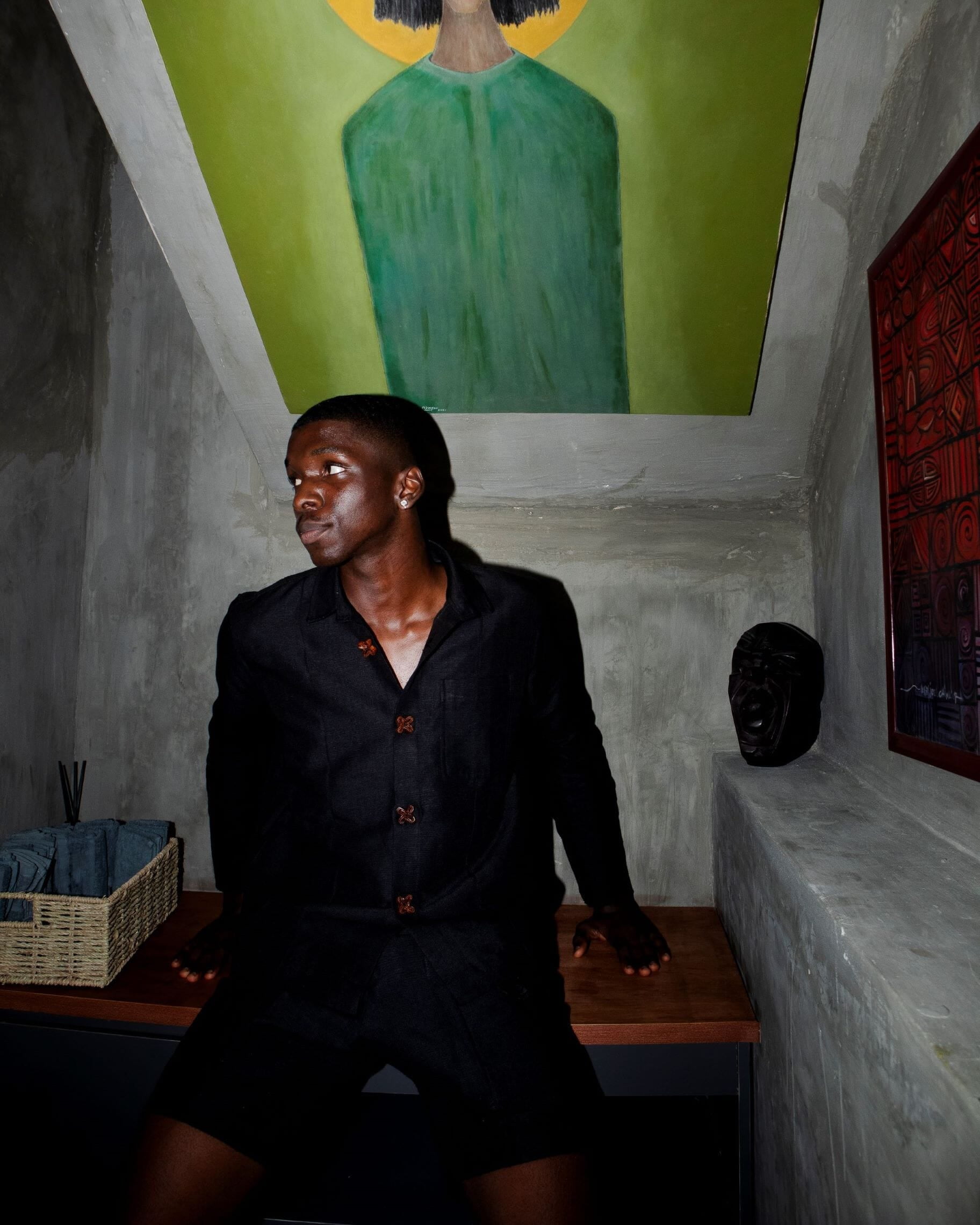
The Oga Shirt lets the material remain visible while giving it a silhouette that feels at home in a contemporary wardrobe. You can wear it as part of a full look. You can pair it with trousers. You can wear it with the Ijapa Shorts. You could even take the same shirt into a completely different setting with the right accessories and shoes
And Then There Are the Ijapa Shorts
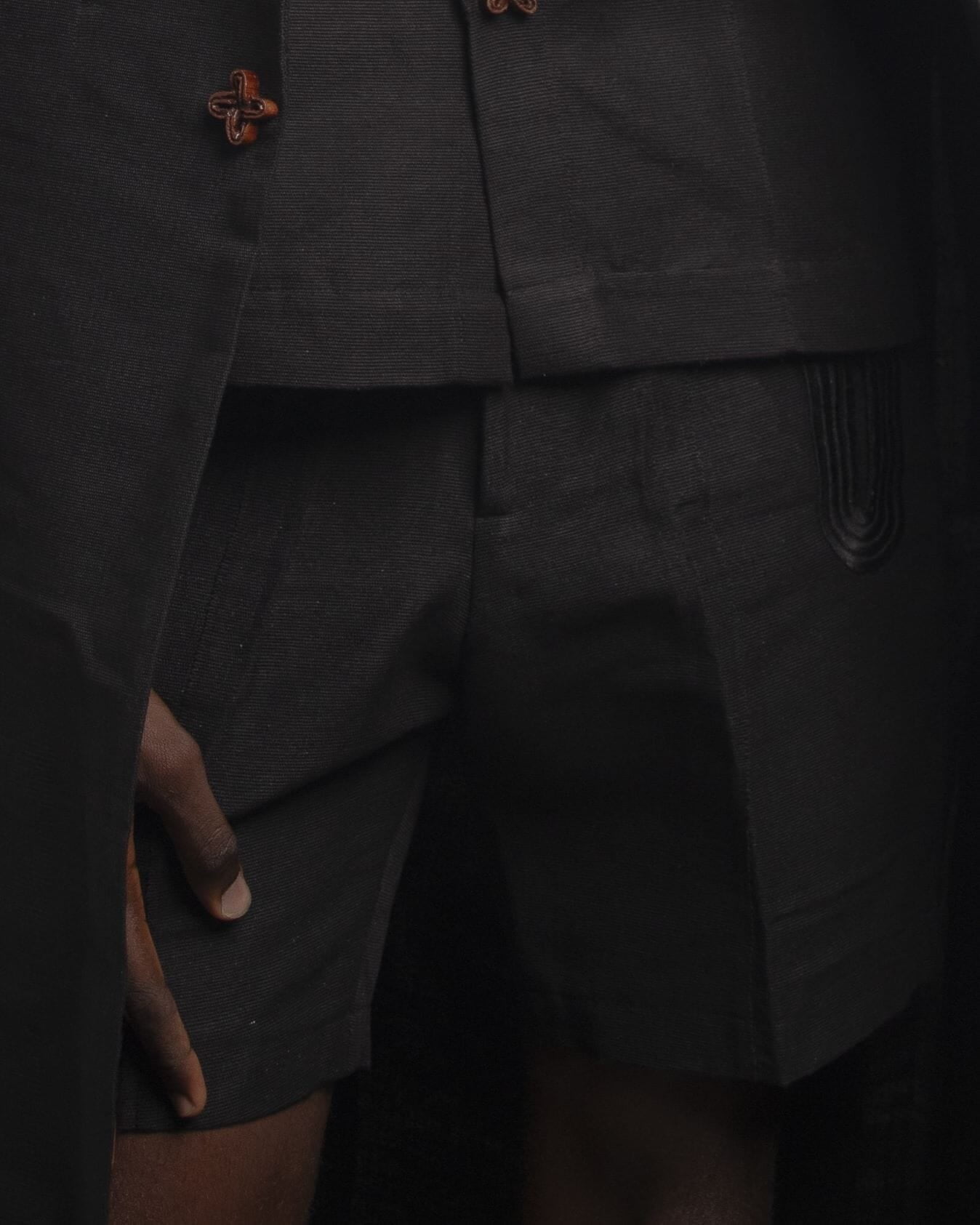
The Ijapa Shorts take the conversation somewhere else. Shorts are casual and Aso Oke has often been treated as formal but when you put the two together and suddenly you have a different question.Why can’t they work?
The Ijapa Shorts have two side pockets, but even here, the detail isn’t treated as an afterthought. The area around the pocket opening has been carefully considered, giving a functional part of the garment its own visual language. This is where fashion starts to feel a little like art.
You look at the whole garment first then you get closer, you notice the pocket.The construction and texture. The way the fabric holds its shape and the small decisions that make a seemingly simple piece feel deliberate.
Aso Oke, Without the Costume of an Occasion
Aso Oke, Without the Costume of an Occasion
There is something freeing about taking a material we usually save for certain days and allowing it to become part of ordinary life. Not because tradition needs to be escaped but because tradition can have more than one future.
The Oga Shirt can go with the Ijapa Shorts for an easy coordinated look.
Wear the Oga Shirt with the Kembe Alari Pants and the proportions change. The look becomes more tailored and considered or Pair it with the Eko Pants and it takes another direction entirely.
Dressing the Material, Not Just the Outfit
Dressing the Material, Not Just the Outfit
When styling Aso Oke, there is another thing to think about: the fabric already has a point of view. You don’t always need to add more. With the Oga Shirt, you can keep the rest of the look clean and let the shirt do the talking. A simple trouser, understated footwear and a few intentional accessories can be enough.
The question becomes less What is Aso Oke supposed to be worn with?
And more: What do I want this particular piece to say?
When Fashion Becomes a Conversation Between Past and Present
Perhaps that is what we find most interesting about Aso Oke. It already carries so much.: History, Craft, Identity, Memory And yet it is still fabric and can be cut.
BAMIGUGU works with Aso Oke because of that tension, we don’t want to remove the history from the material. We want to see what happens when that history meets a different idea of how we dress now.
The Oga Shirt and Ijapa Shorts are one answer. Not the final answer Just one more possibility. And perhaps that is the most exciting thing about a material with this much history: we are still finding out what else it can be.
Available for Order
Available for Order
